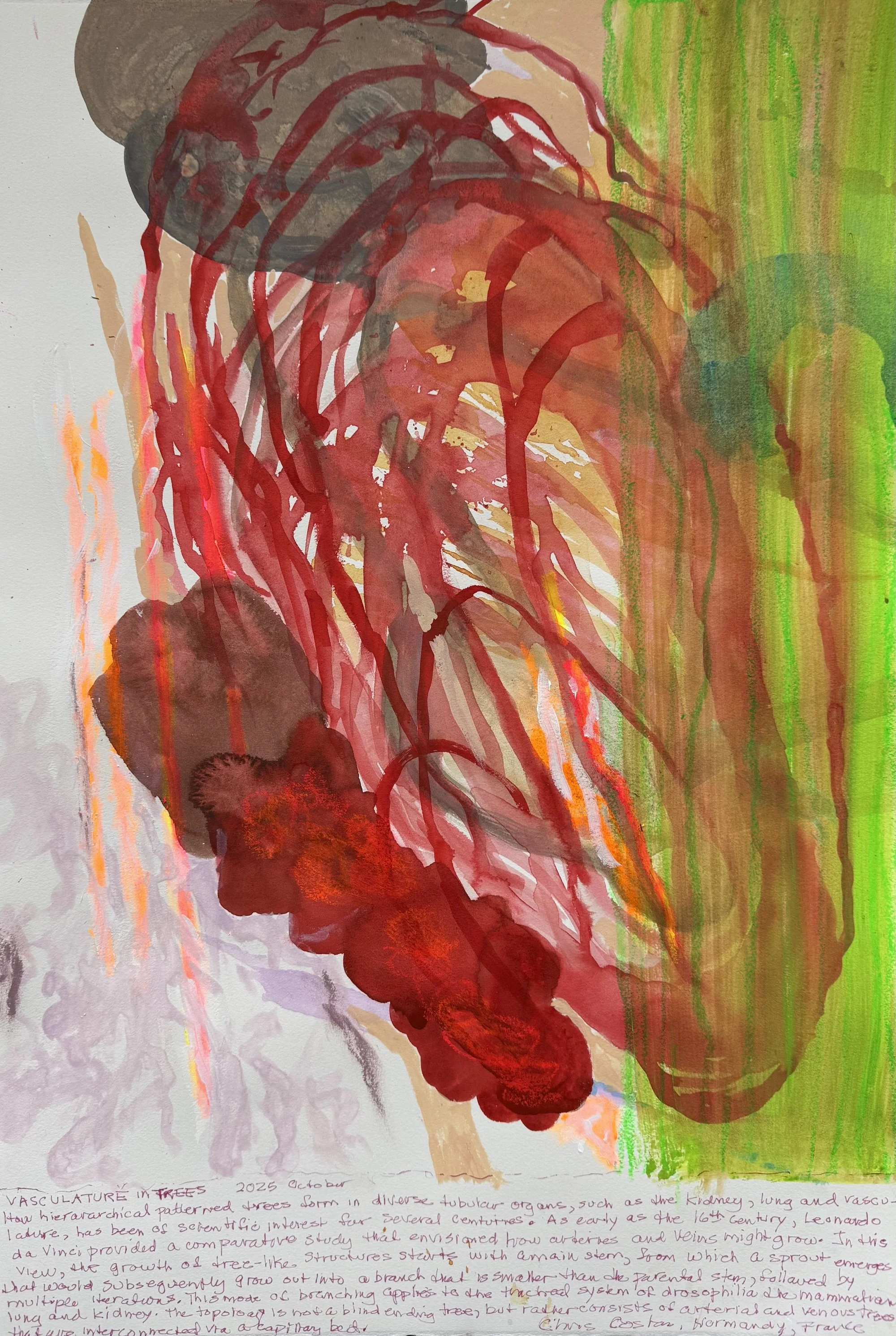
Vasculature in Trees
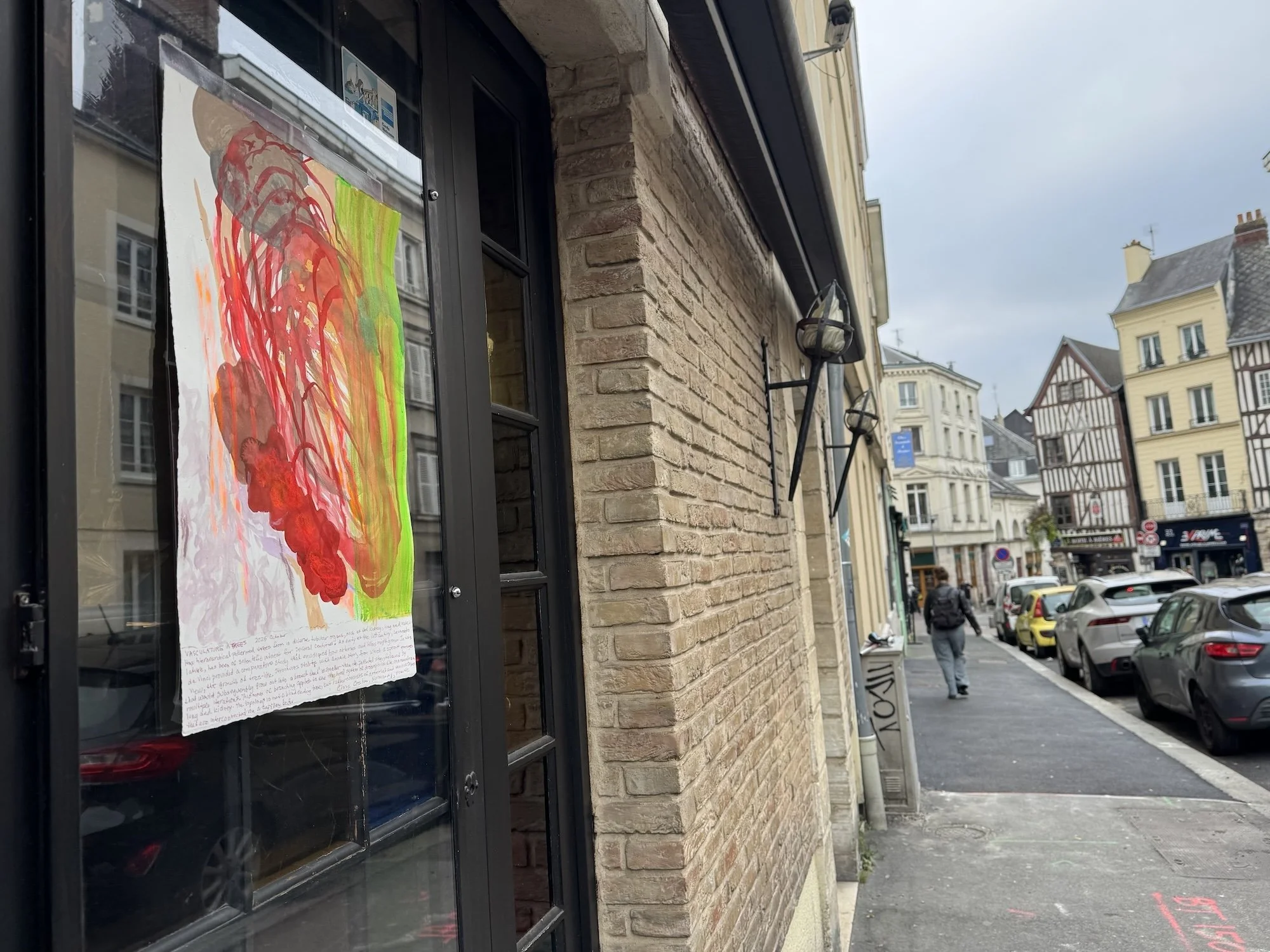
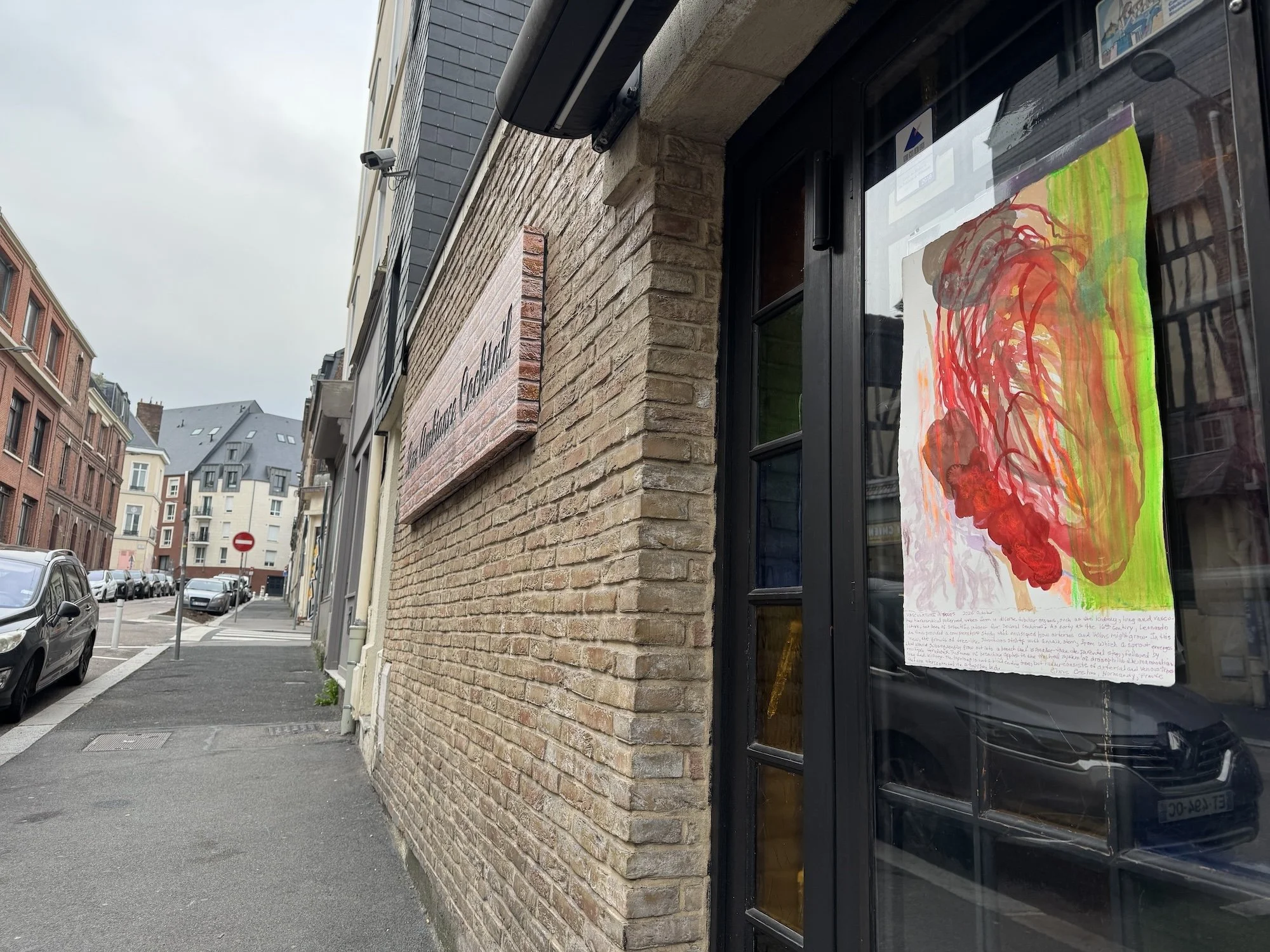
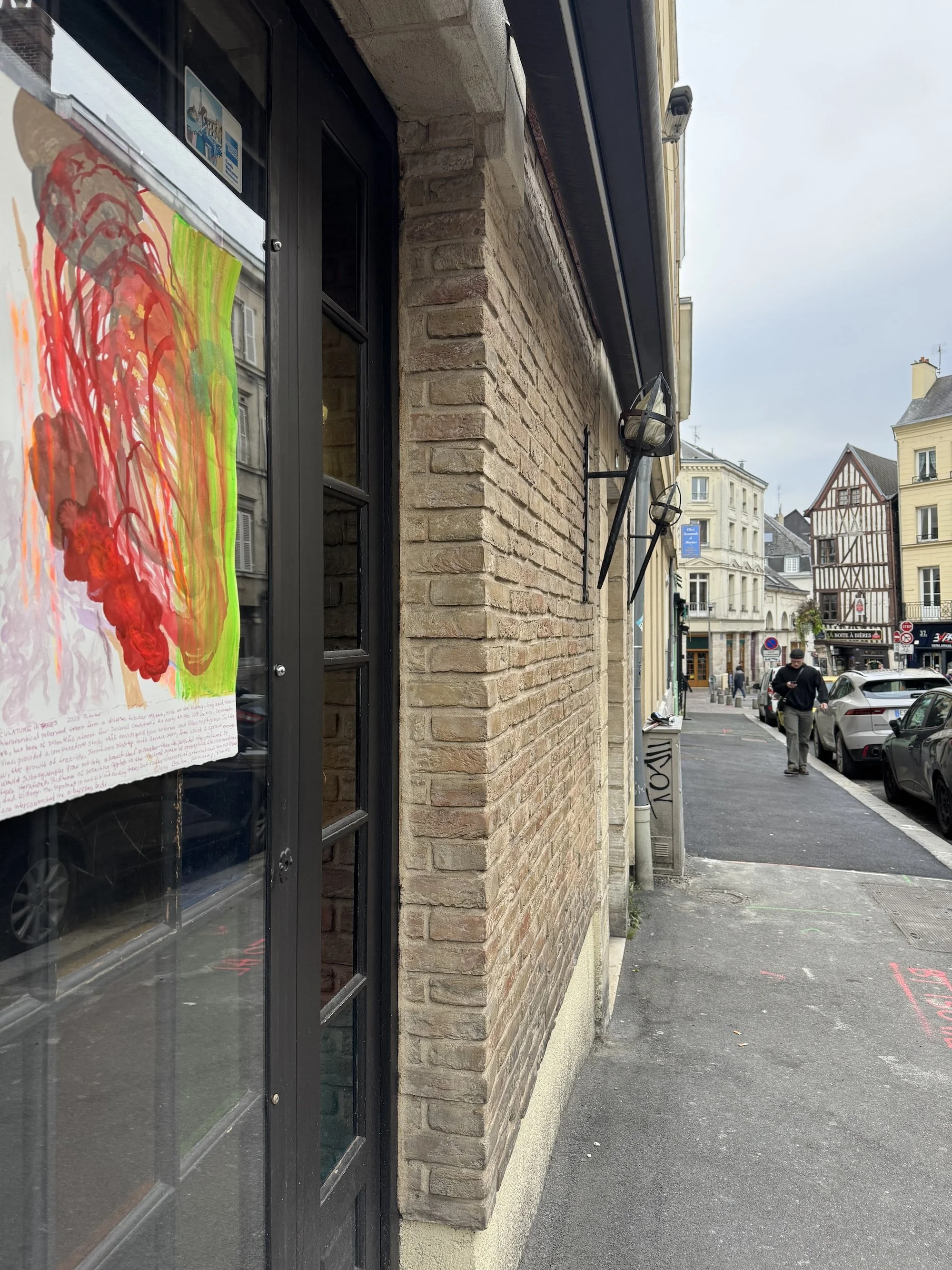
Normandy, France, 2025
How hierarchical patterned trees form in diverse tubular organs, such as the kidney, lung, and vasculature, has been of scientific interest for several centuries. As early as the 16th century, Leonardo da Vinci provided a comparative study that envisioned how arteries and veins might grow. In this view, the growth of tree-like structures starts with a main stem, from which a sprout emerges that would subsequently grow out into a branch that is smaller than the parental stem, followed by multiple iterations. This mode of branching morphogenesis applies to the tracheal system of drosophila, the mammalian lung, and kidney. It also operates in many settings within newly forming blood vessels. However, the final topology of the vasculature is fundamentally different compared to other branched structures. It is not a blind-ending tree, but rather consists of arterial and venous trees that are inter-connected via a capillary bed. Accordingly, establishment of the vasculature follows unique developmental processes, guided by distinct mechanisms important for obtaining proper hierarchical structure and optimal organ function.
acryic, ink on archival paper (26 X 18 inches)
#trees #humanorgans #Normandy #rogueintervention #unsanctionedintervention #artintervention